

SHUHEI OKAWARA
Butoh dancer/Dealer
His dance style is characterized by his ability to dance in between the lives of city dwellers – their daily routines and work. In his theatrical productions, he create works with a hand that invades the reality of the stage.
While designing art projects and concepts that transcend the conventional framework of dance, he maintains a skeptical eye toward the act of creation. In his training and facilitation for companies and educational institutions, he has earned a reputation for continually and thoroughly deconstructing processes and artifacts.
In 2014, he opened Japan’s first mask store specializing in masks by contemporary artists. With the theme of “creation of a new mask culture” in Japan, he is engaged in comprehensive activities related to masks, including the launch of TOKYO MASK FESTIVAL, one of the largest mask exhibitions and sales events in Japan.
He is a “dealer” of masks and various other goods, and in addition to running several specialty stores, he makes his living implementing unique sales formats for artists’ works.
Representative of Usono inc.
Studied under Butoh dancer Shoichi Fukushi.
Butoh
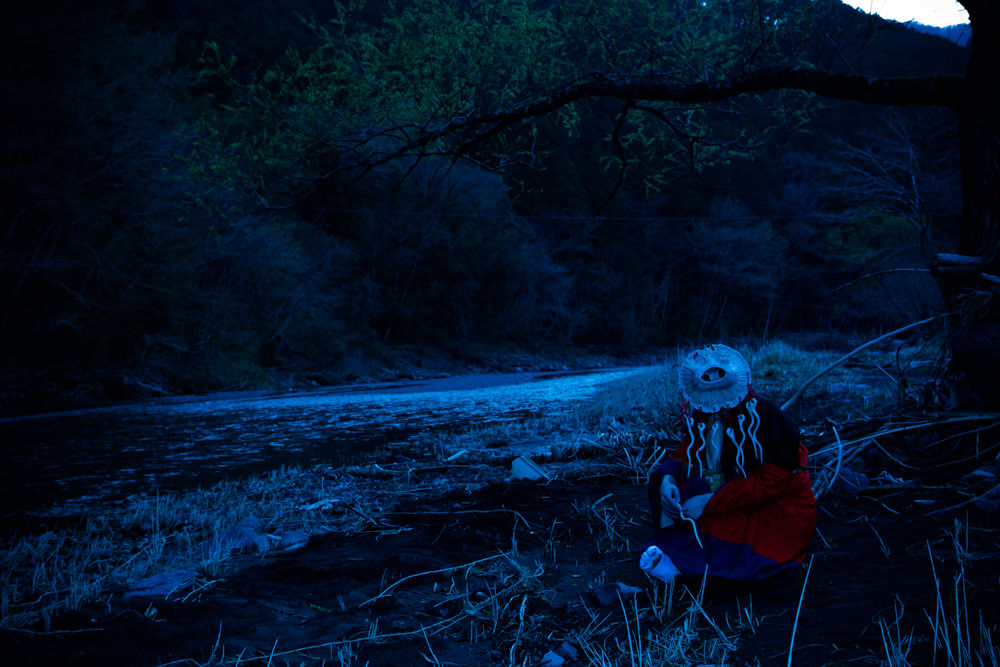
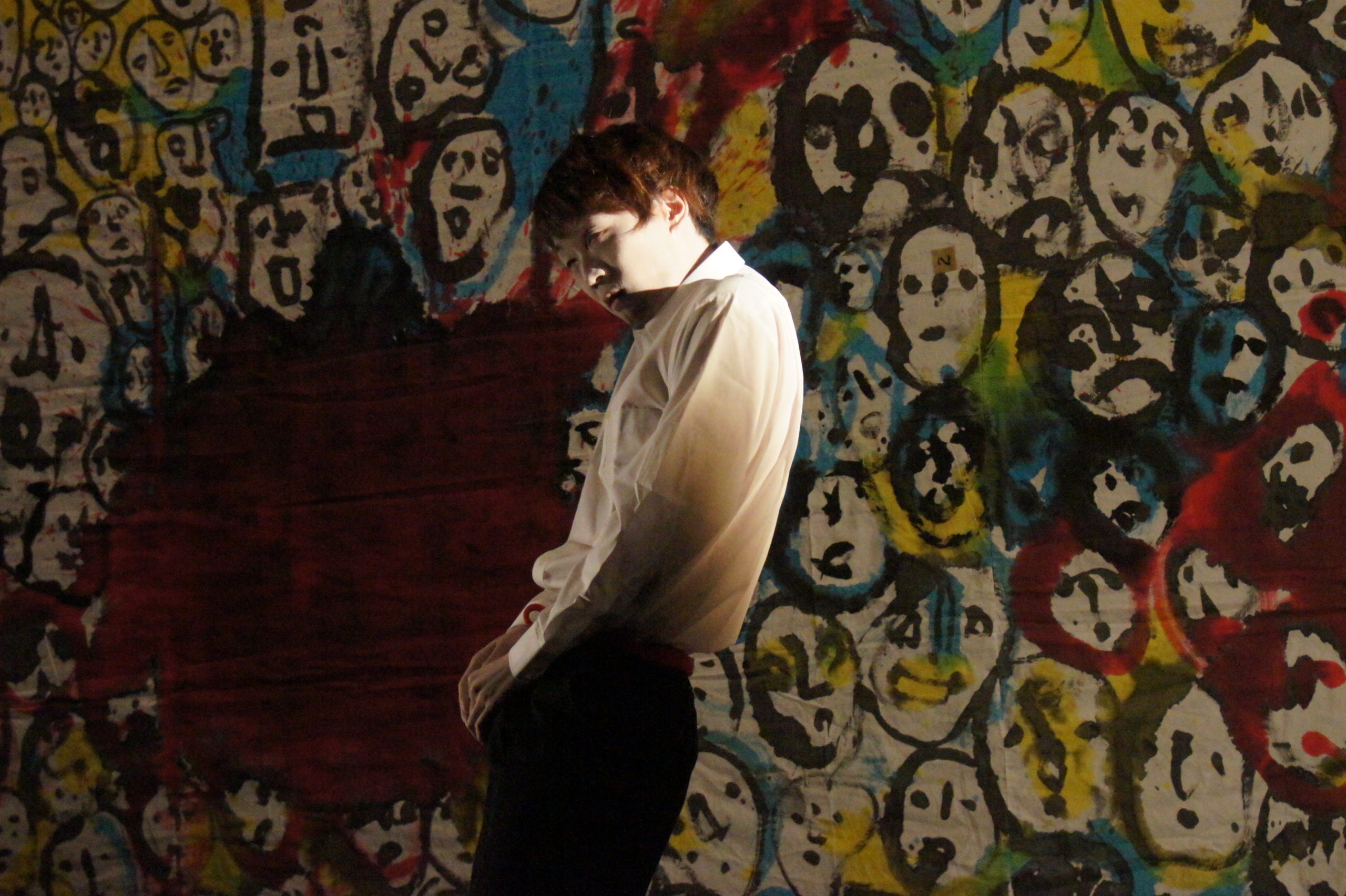


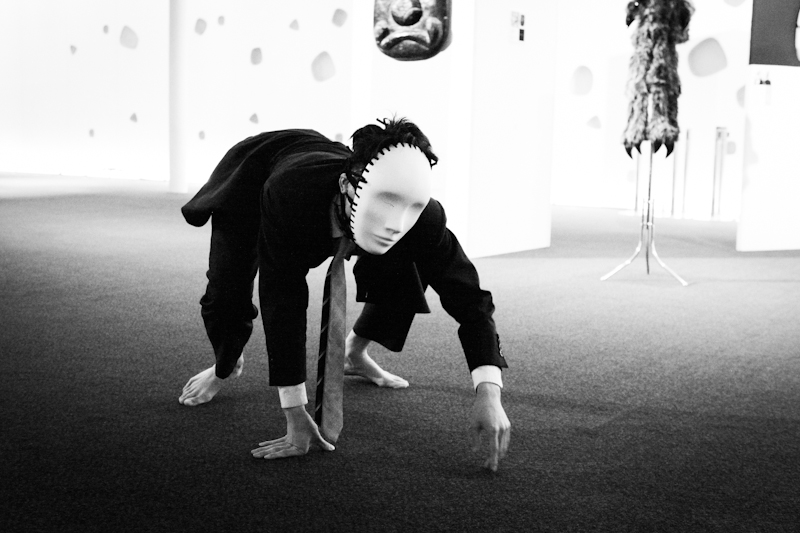
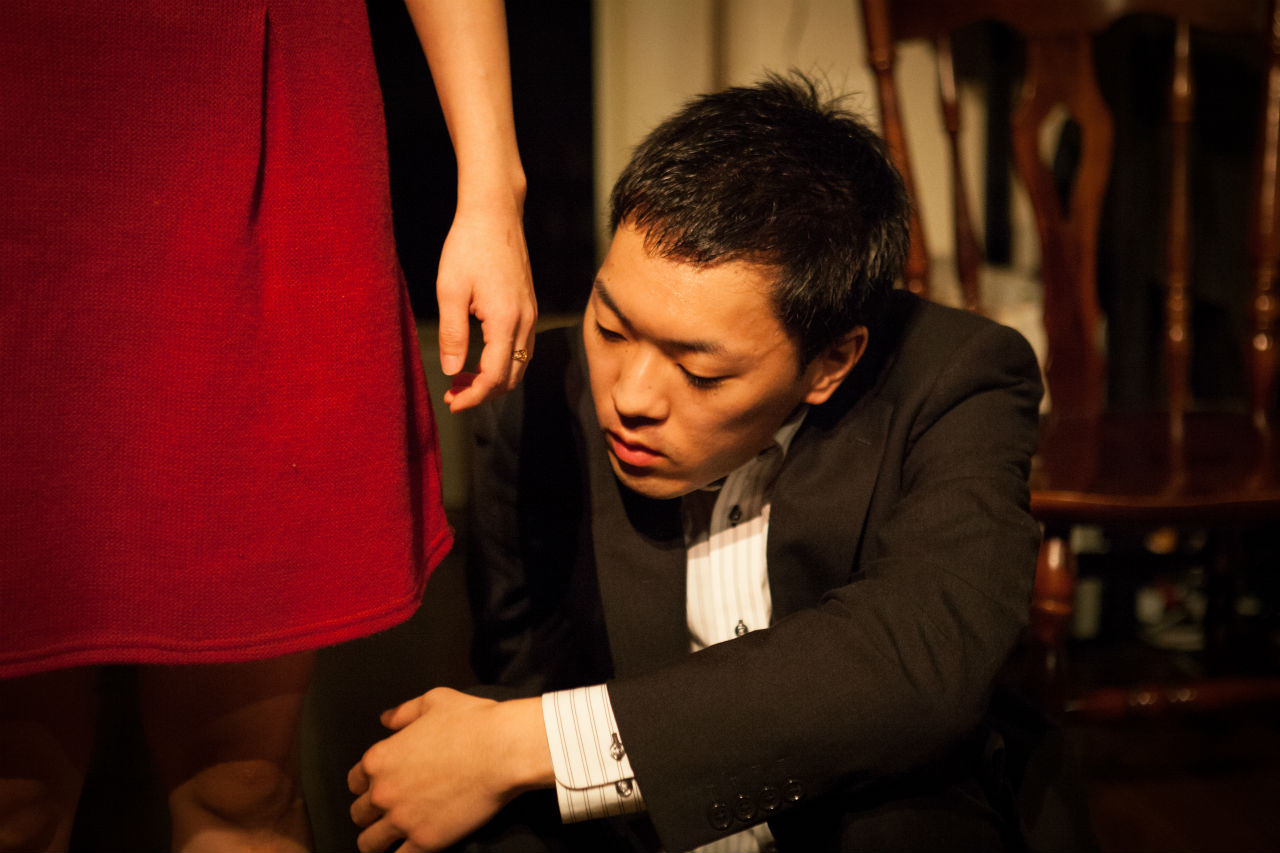

After studying animation dance on his own, He studied under Butoh dancer Shoichi Fukushi from the age of 17. He has been active as a dancer in Butoh, a performing art that originated in Japan. His creed as a Butoh dancer is to “move slowly.”
His representative works include the “Mame Series,” a series of dances based on the theme of beans, such as “Tofu no Sekai,” “Zou to Mame,” and “Coffee ni Kansuru Mame no Hanashi.
He has also created many works that expand the interpretation of choreography. These include “Grilling and Eating Fish over a Charcoal Fire,” a dance in which participants who have never met each other before grill fish together; “Choreography for You,” which choreographs personal everyday life; and the “Radio Gymnastics Road” project, in which radio calisthenics is turned into a dance art form.
He is also active as TEAM MASK, a unit with mask artist Kotaro Sakazume and photographer Elya Osaki.
In recent years, he has been fascinated by human movement in daily life, and has been studying the movements and physical techniques of everyday life, rather than creating theatrical works.
Mask
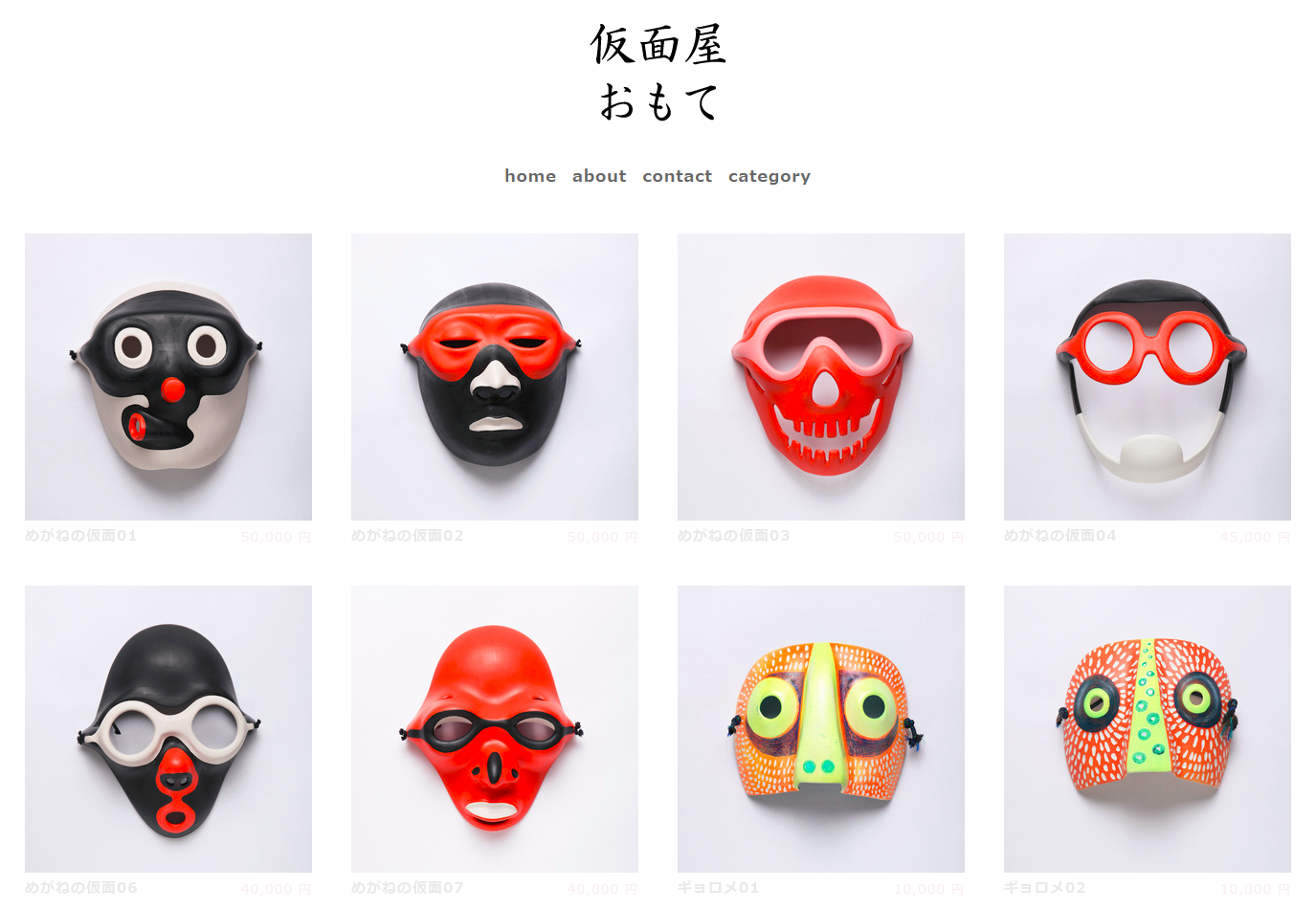


He runs “Kamenya Omote” in Tokyo, specializing in masks of contemporary artists, and was selected as one of the 100 best shops in Tokyo by Time Out Tokyo.
In addition to launching TOKYO MASK FESTIVAL, the largest exhibition and sale of masks in Japan, he also plans and produces all kinds of events related to masks and introduces mask culture from overseas.
In recent years, his “That Face” project, in which he buys faces from the general public and sells them, has attracted worldwide attention and is highly trusted by foreign countries. His own face and other That face series are in the collection of the Museum of Applied Arts in Austria.
Playing cards/Games


He runs “Uso no tobacco”, a store in Asakusabashi, Tokyo, which specializes in playing cards by pretending to be a cigarette. Under the concept of “Let’s carry the spirit of fun with us,” the store collects and introduces unique products and games from Japan and overseas that can be easily carried around and propagate the spirit of fun.
He plans a series of lectures called ” Jyugyo” in the store with a café attached, creating a place for adults to learn to play independently.
He has also made it his life’s work to pretend that “money exchange” is a game, an activity that has attracted attention at Japan’s largest board game event, the Game Market, and other events.
Magic/Sideshow


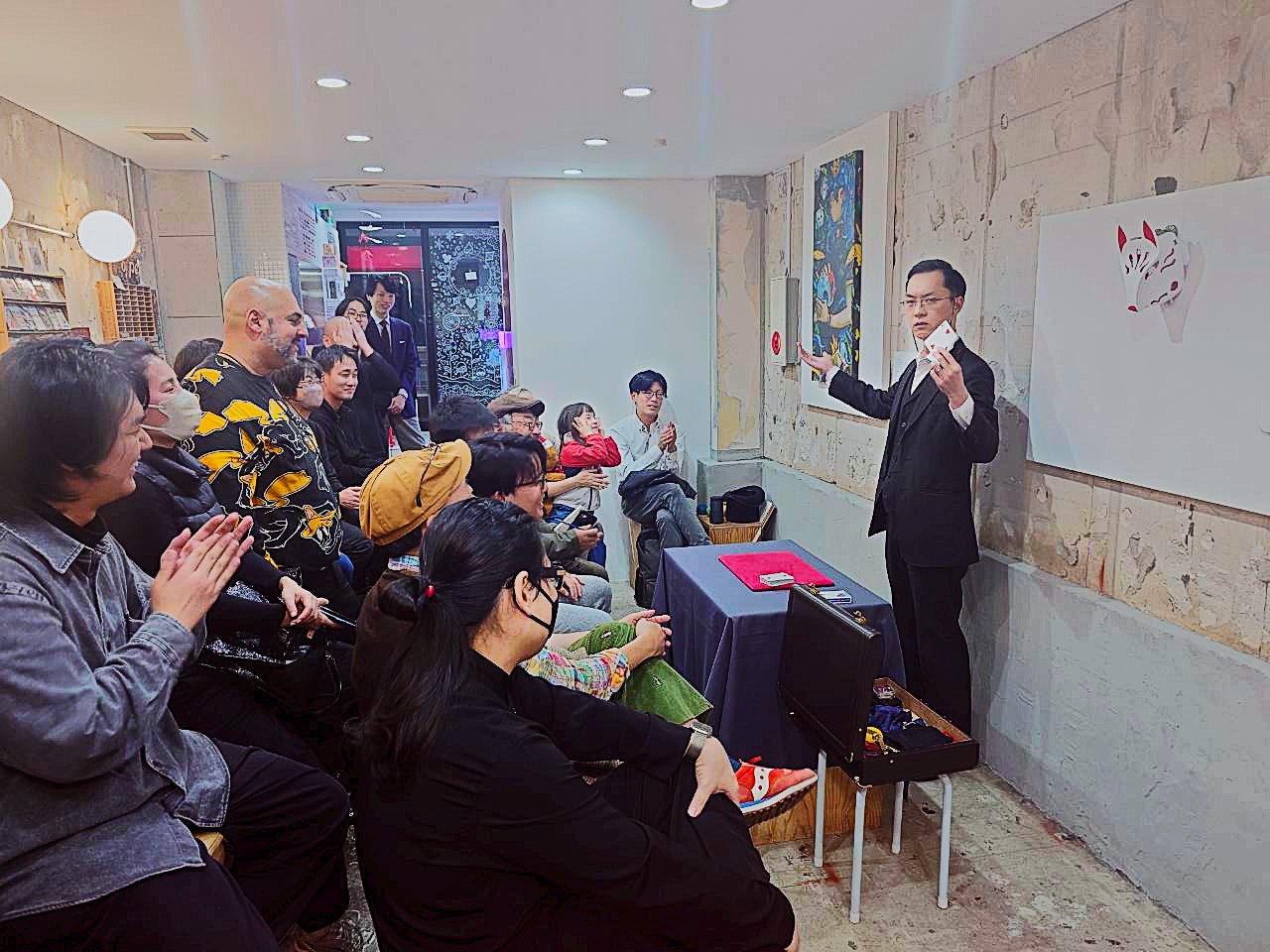


He performs shows and performances on an ongoing basis as a magician.
He specializes in performances that retain a strong sense of the old-fashioned freak show style, and is highly interested in the active preservation of circus and side show culture.
His tricks, which utilize his body as a butoh dancer, and his acts reconstructed from a theatrical perspective, are full of silliness that is distinctly different from the wonder of conventional magic, and are highly appreciated especially by children.
He has extensive experience in teaching techniques to actors and performers of other genres, and also supervises and produces shows.
Impro
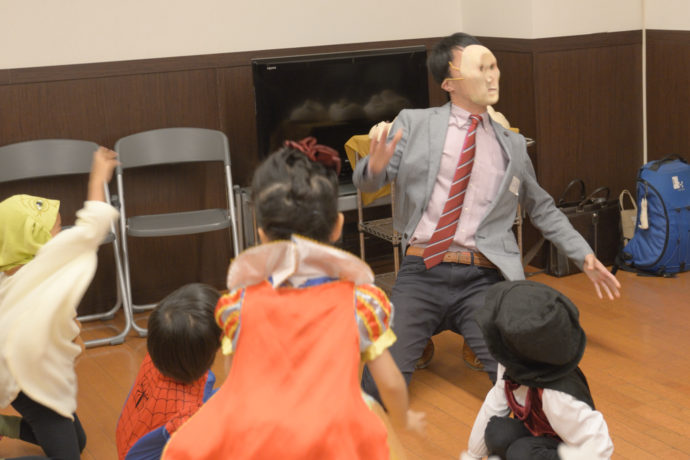
He has been active for many years as a performer of “impro” a show in which he creates a story improvisationally without a script.
He also performs for children and shows with elements of street performance. He is also actively involved in “mask” improvisation, one of the few such performances in the world, and is known for his unique performances that cannot be seen anywhere else.
In recent years, she has been interested in and conducting research on “The Bechdel Test,” a format that explores the issue of gender bias.
Workshop
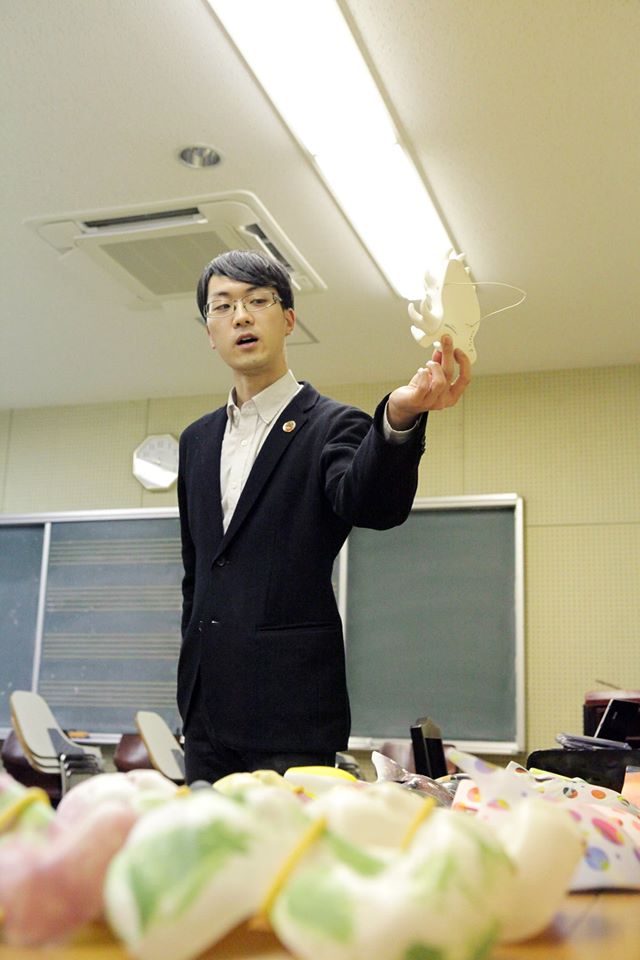
He plans and produces workshops and teaches training courses for companies, educational institutions, and performers.
His experience ranges from implementing theater and stage programs at elementary, middle, and high schools and universities to developing training programs for corporations and designing workshops for products in collaboration with manufacturers.He also works as a planning supervisor, concept designer, and facilitator.
He is particularly active in corporate projects, where he aims to make ordinary work more enjoyable and creative by incorporating art projects both inside and outside of the business.
Because of his specialties as a mask maker, he has received many requests for programs that focus on acting with masks and on the body.
In recent years, he has been asked to give lectures and reports on the themes of “stores,” “free time,” “money,” “giving,” “public,” and “soundness,” among others.
He is an ongoing lecturer at the PARA theater in Jimbocho.
Interviews


Media


Types of work